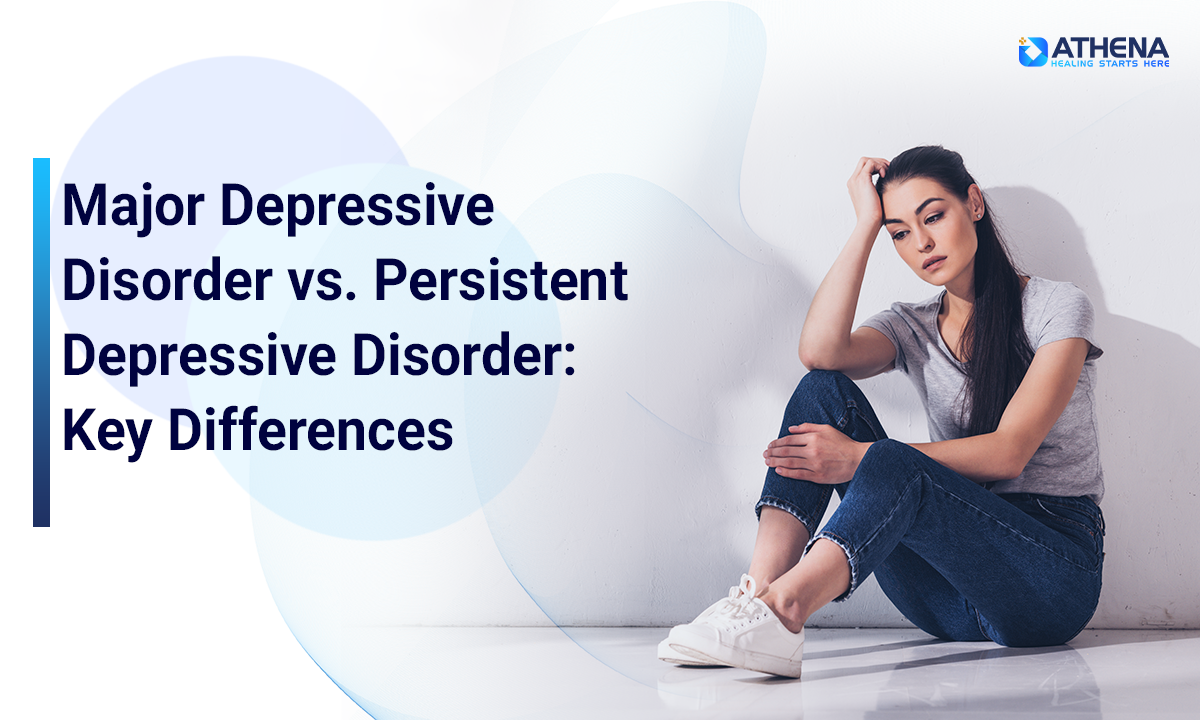

Depression is the word most commonly discussed as an isolated case, and in mental health professional practice, it is a spectrum. There are two most prevalent diagnosed depressive disorders with Major Depressive Disorder (MDD) and Persistent Depressive Disorder (PDD).
Although they have common symptoms, they have vast differences in the length of time, the severity, onset, and the long-term effects.
Understanding the distinction between Major Depressive Disorder vs Persistent Depressive Disorder is essential, not only for accurate diagnosis, but also for choosing the right treatment approach and preventing relapse.
Difference between Major Depressive Disorder and Persistent Depressive Disorder
Depressive disorders affect mood, thinking, behaviour, physical health, and overall functioning. They are not signs of weakness or lack of willpower; they are medical and psychological conditions influenced by biology, environment, and life experiences.
Both MDD and PDD fall under the umbrella of depressive disorders, but their clinical patterns are distinct.
What are Depressive Disorders?
Depressive disorders influence mood, thinking, behaviour, physical health, as well as general functioning. They are not indicators of frailty and absence of determination, but they are medical and mental disorders that are affected by the body, surroundings, and life experiences.
Both MDD and PDD are categorized under a depressive disorder, though they differ in their clinical patterns.
What Is Major Depressive Disorder (MDD)?
Major Depressive Disorder is the one that is marked by the presence of severe depressive episodes that develop within a rather short time and have a strong negative effect on the functioning every day.
Diagnosis of Major Depressive Disorder Symptoms
To be diagnosed, one must have a minimum of five or more symptoms, and they must be present most of the day, almost every day, and for at least two weeks:
- Persistent depressed mood
- Considerable loss of interest or pleasures (anhedonia)
- Several changes in weight, either gain or loss, or loss of appetite.
- Insomnia or hypersomnia
- Psychomotor agitation or retardation.
- Fatigue or loss of energy
- Dysproportionate guilt or worthlessness.
- Lack of ability to think, to concentrate, or to make decisions.
- Persistent death or suicide ideation.
These symptoms are a definite deviation from past functioning, and they tend to be overwhelming and crippling.
What Is Persistent Depressive Disorder (PDD)?
Persistent Depressive Disorder used to be called dysthymia, and it is a long-term depression in which the symptoms are experienced over a period of years and not weeks.
Common Symptoms of Persistent Depressive Disorder.
The symptoms are typically not as intense as MDD but are chronic and extensive and enduring, occurring:
- At least 2 years in adults
At least 1 year in children and adolescents
Common symptoms include:
- Chronic low mood
- Low self-esteem
- Feelings of hopelessness
- Low energy or fatigue
- Low concentration or not making decisions.
- Alterations in sleep and appetite.
Patients with PDD tend to complain of always being down or never being quite fine, which complicates the diagnosis.
MDD vs PDD Differences: Clinical Comparison
| Feature | Major Depressive Disorder (MDD) | Persistent Depressive Disorder (PDD) |
| Onset | Sudden or episodic | Gradual, often unnoticed |
| Duration | Minimum 2 weeks | Minimum 2 years |
| Symptom Severity | Moderate to severe | Mild to moderate |
| Course | Episodic | Chronic and continuous |
| Functional Impact | Severe impairment during episodes | Long-term emotional and motivational erosion |
| Self-Perception | “Something is wrong.” | “This is just how I am.” |
This table is the key to understanding the essential differences between MDD vs PDD and clarifies the confusion between MDD and Dysthymia.
Persistent Depressive Disorder vs Major Depressive Disorder Symptoms
Although both disorders entail sadness, fatigue, and low drive, the way the symptoms manifest themselves over time varies.
- MDD symptoms are severe, disturbing, and observable.
- Symptoms of PDD are mild, protracted, and internalised.
Quite a number of individuals with PDD keep working and sustaining relationships, yet with constant emotional pressure, less happiness, and constant dissatisfaction.
Causes of Persistent Depressive Disorder vs Major Depressive Disorder
Shared Causes
- Genetic predisposition
- Norepinephrine, neurochemical imbalances (serotonin, dopamine)
- Traumas or negative life experiences.
- Chronic stress
- Medical illnesses
PDD-Specific Contributors
- Long-term emotional neglect
- Childhood adversity
- Attachment disruptions
- Continuous stress of an interpersonal nature.
MDD-Specific Triggers
- Acute loss or grief
- Sudden life changes
- Hormonal shifts
- Significant psychological stressors.
Knowledge of these causes can help clinicians design their interventions more effectively.
Risk Factors for MDD vs PDD
There are factors that make a person more susceptible to one or both of these conditions:
- Depression within the family.
- Anxiety disorders
- Substance use
- Chronic medical conditions
- Social isolation
- Unresolved trauma
The symptoms of PDD make people feel normal, and they tend to seek help later, thereby exposing their impairment to long-term risk.
When MDD and PDD Are Cases of each other.
Persistent Depressive Disorder may come with episodes of Major Depressive Disorder on top of its symptoms. This is what is referred to as double depression. Double depression often:
- Feels more severe
- Lasts longer
- Needs long-term and integrated treatment.
Treatment Differences between Major Depressive Disorder and Persistent Depressive Disorder
The precise diagnosis is essential, as treatment methods vary.
Major Depressive Disorder Treatment.
- Antidepressant medication
- Cognitive Behavioral Therapy (CBT)
- Interpersonal Therapy (IPT)
- Short-term intensive intervention.
Persistent Depressive Disorder Treatment.
- Long-term psychotherapy
- Integrated combination drug and treatment.
- Schema-oriented or psychodynamic therapy.
- Focus on self-esteem, identity, and emotions.
In Athena Behavioral Health, the treatment plans are individualised to deal with either MDD or PDD or both conditions and concentrate on long-term recovery instead of symptom suppression, in contrast to short-term supplementation.
Read Also: Difference between Bipolar and Borderline Personality Disorder
Why PDD Often Go Undiagnosed?
Persistent Depressive Disorder may be ignored since:
- Symptoms are less dramatic
- People work sufficiently.
- Emotional numbness gets to be customary.
This is because professional evaluation is particularly crucial when a low mood persists for months or years.
Conclusion
It is not that depression should be left alone or that it should be tolerated silently over the years, but it should be noticed, sympathized with, and treated by professionals. The first step to meaningful healing is to understand the distinction between Major Depressive Disorder and Persistent Depressive Disorder.
Reach out now, call +91 9289086193 or go to www.athenabhs.com. Let us walk beside you. Healing isn't a promise; it's already beginning the moment you choose yourself.