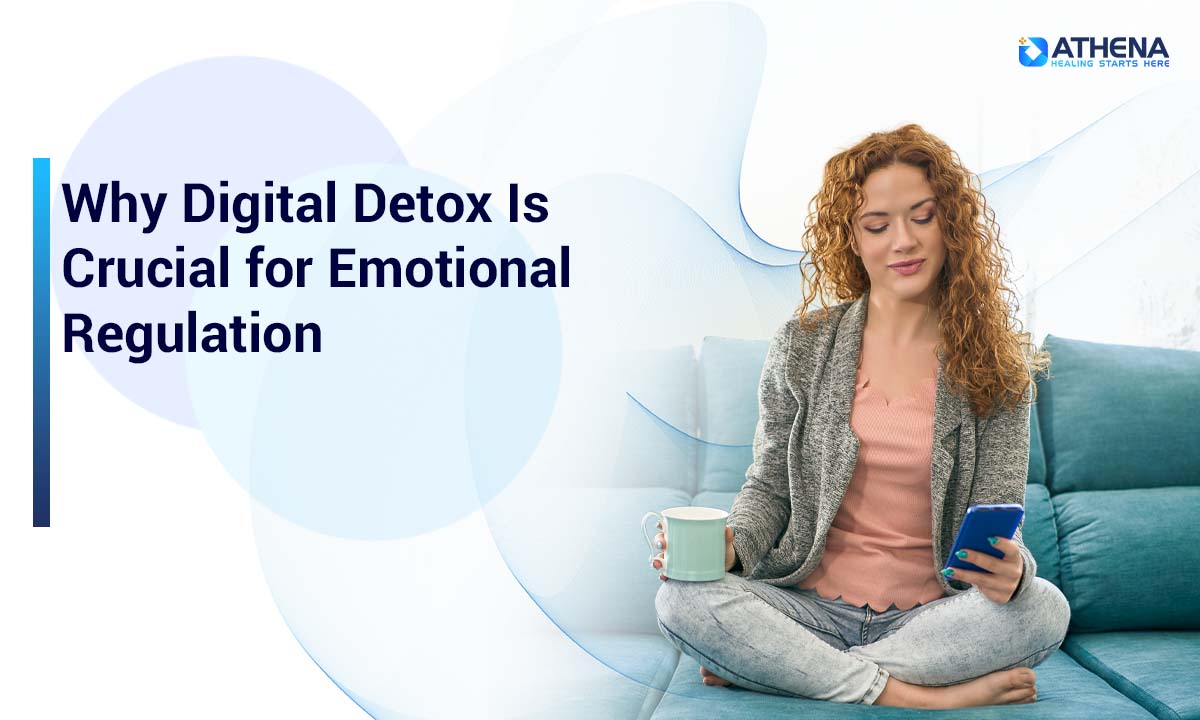

In today’s time, excessive exposure to digital content and social media causing severe mental health conditions. A lot of us deal with more anxiety, sudden mood shifts, and trouble handling stress because of nonstop notifications and the pressure to compare ourselves online. We are so occupied with digital media that we often ignore the reasons for digital detox and emotional regulation in our daily lives. Stepping away from devices on purpose—what people call a digital detox actually gives your mind a real chance to settle down, helping you get better at emotional regulation and find some genuine calm again.
What Is Digital Detox?
Since this generation is suffering from a condition called “Infobesity,” which simply means getting exposed to excessive information that our brain cannot take it. The main reason behind is the digital platforms. Therefore, we need digital detox. A digital detox is nothing complicated, it is choosing to put your phones, tablets, and computers aside for a while, whether that’s a couple of hours, a full day, or longer. The point isn’t to swear off technology forever; it’s about drawing healthy lines so real-life moments and self-care get priority again like good-old times.
Detoxing digitally helps in breaking that constant loop of dopamine hits from likes and alerts, which lets your brain unwind and return to a more natural rhythm for handling emotions.
There are a few recent studies on this, and the evidence is pretty clear. For example, a large 2025 study in JAMA Network Open followed young adults who stayed off social media for just one week. They reported drops in anxiety of around 16%, depression symptoms down nearly 25%, and better sleep too. Other reviews from the past couple of years show similar patterns. It clearly suggests that stepping away from screens helps ease depression, cuts down on compulsive checking, and steadies’ mood overall.
At Athena Behavioural Health Services, we see this play out with patients all the time. When they start setting real limits on device use and pair it with therapy like CBT, they regain control over their emotions in ways that stick.
The Link Between Digital Detox and Emotional Regulation
We need to know that all that digital noise adversely affects us and keeps the brain in a low-level stress mode. Basically, it wears down the part responsible for keeping impulses and feelings in check. In addition, recent research shows that regular breaks from screens improve self-control, especially for people who already struggle with mild anxiety or low mood.
People who try it often say they notice their emotions more clearly, react less intensely to triggers, and bounce back faster—exactly what good digital detox and emotional regulation looks like.
Here’s how the connection works:
- Reduces Overstimulation
- Decreases Exposure to Negative Triggers
- Restores Attention and Mindfulness
- Improves Sleep Quality
- Rebuilds Natural Dopamine Balance
- Encourages Real-World Connection
- Supports Long-Term Resilience
Effects of Social Media on Emotional Health
Upward Social Comparison:
Social media exposes us to unrealistic and fabricated lives. And when you see a perfect life online, you feel inadequate. This inadequacy often leads to feeling deprived and depressed.
Increased Anxiety:
We have become so habitual of checking notifications, posting pictures for likes and comments that we have started seeking validation from unknown. This increases anxiety and results in causing distress.
Higher Risk of Depression:
Since you are mostly anxious because of frequent exposure and validation on social media platforms, studies shows that you are at a higher risk of depression.
Loneliness Despite Connection:
Even if we are around our loved ones, we ignore human interaction and keep scrolling our phones. It results in isolation and losing real connection.
Sleep Disruption:
Using phones till late night causes sleep disruption and deprivation. And lack of sleep is one of the major reasons behind a lot of health-related issues in humans.
Cyberbullying and Negativity:
Increasing cases of negative and cyberbullying cases affects the growth mindset in people, especially in teens. Therefore, it is best to avoid unnecessary access to digital world.
Reduced Emotional Regulation:
Overstimulation makes it harder to manage impulses, leading to mood swings and reactivity.
Body Image Issues:
Filtered photos and beauty standards contribute to dissatisfaction and eating disorders, particularly among youth.
Addictive Patterns:
Dopamine-driven feedback loops encourage compulsive checking, increasing emotional fatigue.
How Digital Detox Improves Emotional Regulation
When you dissociate, you will notice a gradual change in your behavioural pattern. You will enjoy a better mental health as it improves emotional regulation. Make sure you keep a check on your daily digital usage to maintain a healthy mind and body. We recommend considering seeking professional help as well if your addiction is not in your control and is now taking a toll on your mental wellbeing. Once you start with digital detox, you will notice a lot benefits.
Benefits of Digital Detox
The benefits of digital detox reach well past just managing emotions:
- Lower day-to-day stress
- Anxiety disorder will slowly go away
- You will notice better sleep cycle and a freshness as you wake up the next morning
- You will utilize your time in better things or engaging yourselves in creative activities
- Sharper focus and real productivity without constant pings
- Stronger relationships when you’re fully present with people
- A genuine boost in overall satisfaction as offline activities bring back gratitude and joy
Tips to Start a Successful Digital Detox
Don’t try to quit everything cold turkey. Start small and build from there:
- At first, you need to start with using your phone’s built-in timers to cap daily use
- We recommend you to make certain places device-free—like the bedroom or dinner table. Make sure no one in your home uses devices in the device-free zone.
- Instead of mindless scrolling, you can switch to something enjoyable and mindful like a walk, a book, a hobby
- Turn off every notification that isn’t truly essential
- Block out regular offline windows, maybe evenings or weekends
- It would be better if you keep a quick journal of how your mood feels to stay motivated
- You can of course get friends or family on board for support
- Begin with just one unplugged hour a day—you’ll be surprised how quickly it adds up
Balancing Digital Engagement and Emotional Well-Being
In today’s time when not just our work culture is dependent upon social networking, digital availability and technology, but also our kids for studies, it is quite difficult to completely disassociate ourselves from digital engagement. Therefore, balancing is the key. You cannot completely get devoid of it but of course you can keep a check on it.
In short, consistent breaks keep everything in balance so devices add to your life instead of draining emotional well-being.
Conclusion
In a world that never seems to switch off, choosing digital detox has become one of the most practical ways to protect emotional regulation and mental health. We suggest you to give yourself the permission to unplug which would open up rooms for reflection, real relationships, and true peace, followed by less anxiety, smoother moods, and a richer everyday life.
If the weight of constant connectivity is wearing on your emotions, we recommend you to reach out for professional support to feel alive and witness the benefits of digital detox. Get in touch with Athena Behavioral Health Services today for personalized, evidence-based care. Our team is here to help you find lasting balance, take that first step and start feeling like yourself again.