
Best Depression and Addiction Treatment in Delhi
Athena Behavioral Health offers depression and addiction treatment in Delhi built for the moment low mood and substance use stop being two separate problems and start being one, because that's usually when self-help and half-measures stop working.
- Single Psychiatric Assessment & Diagnosis for both conditions
- Medically supervised detox where required
- Antidepressant management run alongside de-addiction care
- One treatment plan, not two competing ones
- Family sessions to unpack how the two are connected
- Structured Relapse Prevention & Aftercare
Book Your Appointment

Treatment for Depression and Addiction in Delhi: Two Conditions, One Root Cause
In most cases we see, depression and addiction didn't arrive separately, one grew out of the other. A person starts using alcohol or a substance to quiet a mood that won't lift, it works for a while, and then the substance itself starts pulling the mood lower, until guilt about the using adds to the low self-worth that started it all. Trying to treat just one side of this rarely holds for long, because the untreated half keeps pulling the person back.
At Athena Behavioral Health, addiction and depression treatment in Delhi begins with a single Psychiatric Assessment & Diagnosis that looks at both conditions together, rather than a psychiatrist managing mood on one track and a counsellor managing substance use on another with no conversation between them. We look at sequence, at reinforcement, and at what function the substance has actually been serving, before a single plan is built around the answer. Patients often say no one had ever laid out that connection for them so plainly before.
"If someone is expressing suicidal thoughts, particularly during a low mood episode worsened by substance use, this requires immediate attention. Contact your local emergency number or the nearest hospital right away. Safety always comes first, before anything else."
Meet Our Psychiatrists for Depression and Addiction Treatment in Delhi

Prof. (Dr.) Nimesh G. Desai

Dr. Ashish Mittal

Dr. Rahul Rai
Inside Our Delhi Centre: What Integrated Care Looks Like Day to Day
A Single Intake Maps Both Conditions at Once
The assessment tracks depressive history and substance use side by side, specifically looking for the points where one has driven the other.
Withdrawal Is Managed With Mood in View
When detox is required, it's supervised medically with depressive symptoms monitored throughout, since withdrawal can sharply worsen low mood for a period.
Nothing Is Sequenced, Everything Runs Together
Mood treatment doesn't wait for sobriety, and de-addiction doesn't wait for the depression to lift. Running both together is what actually holds.
Care Intensity Matches the Case, Not a Fixed Template
When outpatient visits aren't quite enough but full residential admission isn't necessary either, our Day Care Programme provides several supervised hours at the centre each day.
Medication Decisions Account for the Full History
Antidepressants are chosen and monitored with substance use history factored in from the start, since certain combinations carry real risk.
The Body Is Treated Alongside the Mind
Mindfulness, Yoga & Wellness sessions give patients tools for the restlessness and low energy that frequently trigger relapse in both directions.
Clinical Excellence
One Clinical Team, Trained for Dual Diagnosis From the Start

Our psychiatrists and clinical psychologists approach depression and addiction as a single dual diagnosis to be treated together, not as two conditions handed to two different specialists. People searching for the best depression and addiction treatment in Delhi are frequently people who've already tried antidepressants while quietly continuing to drink or use, or completed a de-addiction programme only to relapse once an untreated depressive episode resurfaced.
Every case is different by design. Someone using substances to blunt a depression that predates the substance use needs a different plan from someone whose depression only set in after years of heavy use. Working professionals managing this alongside demanding roles can draw on our Corporate Wellness & EAP and Executive & High-Performance Care programmes, and younger patients are supported through Child & Adolescent Psychiatry.
One team stays with a patient's case from intake through long-term follow-up, so history never has to be repeated to someone unfamiliar with it.
Modern Lifetime Challenges
Why This Combination Goes Unnoticed Across Delhi
Long commutes and longer work hours that leave low mood mistaken for ordinary tiredness, a social culture where drinking is rarely questioned as long as it happens in the "right" settings, and a hesitation to admit that a habit has quietly turned into a coping mechanism, all let depression and addiction run together, unaddressed, for far longer than they should.
Not every period of heavier drinking or substance use is the same as depression-driven substance use, and recognising this difference matters significantly for how it gets treated. At Athena Behavioral Health, a trusted centre for depression and addiction treatment in Delhi, this distinction forms the foundation of our clinical assessment process.
Depression-linked substance use, however, follows a very different and more concerning pattern. It gradually becomes the standing, default way to get through a mood that simply won't lift on its own, regardless of circumstances improving. Over time, each condition begins reinforcing the other, making both depression and substance use progressively harder to shift without integrated treatment addressing them together.
This is precisely why consulting an experienced psychiatrist in Delhi early on makes such a difference. Correctly identifying which pattern is actually at play allows for a treatment plan that targets the real underlying cause, rather than addressing only the visible, surface-level symptoms, giving patients a genuine path toward lasting recovery.

Reading the Signs: Is It the Mood, the Substance, or Both?
Families in Delhi often bring us one half of the story, the drinking they've noticed, or the low mood they've noticed, without realising how the two usually connect. This table shows how our team reads common signs during the first assessment to work out what's actually driving what.
| What You're Seeing | What It Could Mean Alone | What It Often Means When Connected |
| Low energy, flatness most days | Fits a depressive episode on its own, or the after-effects of regular substance use | Fits depression-linked use, where the substance is both a symptom and a cause of the low energy |
| Drinking that's increased over recent months | Could be a developing situational habit tied to a specific stressor | Fits when the increase tracks closely with a worsening mood, rather than one clear event |
| Guilt or self-criticism after drinking or using | Could reflect low self-worth from depression, or simply follow any heavier use | Strongly suggests the two are feeding each other, guilt deepening the mood, mood driving further use |
| Using alcohol or a substance specifically to sleep or "switch off" | Could be occasional and largely harmless on its own | A clear sign of depression-linked use, where the substance has become a coping tool, not a social one |
| Relapse shortly after antidepressants start working, or after finishing a de-addiction programme | Suggests whichever condition was treated wasn't fully addressed | Strongly suggests the untreated half is resurfacing and pulling the treated half back down |
Warning Signs That Usually Get Read as Two Separate Stories
Families and even patients themselves tend to notice only one half of this at a time, either the mood or the drinking, without seeing how tightly the two are actually wound together.
Drinking or Using That Tracks a Worsening Mood
Substance use that quietly climbs in step with rising hopelessness, exhaustion, or withdrawal from daily life.
Using Just to Function, Not to Feel Good
Alcohol or drugs treated as a requirement for getting through an ordinary day, not as something enjoyed.
Low Mood That Gets Worse With Use, Not Better
Guilt, hopelessness, or flatness that visibly deepens in the hours or days following substance use.
Relapse Right After Things Seemed to Improve
Finishing a de-addiction programme, or responding well to antidepressants, only to slide back once an underlying depressive episode returns.
Quietly Dropping Prescribed Medication
Stopping antidepressants without telling anyone, sometimes because of how they interact with substance use, sometimes from a quiet belief that treatment won't help anyway.
Loved Ones Who Can't Separate the Two Anymore
Family members unsure whether what they're watching is depression, addiction, or one feeding directly into the other.
Not Sure If This Is You? Talk to a Specialist
Confidential Support, available 24×7
ABOUT THERAPY AT ATHENA
How Depression and Addiction Treatment Progresses at Our Delhi Centre
Phase One, Combined Assessment
A psychiatrist conducts a single Psychiatric Assessment & Diagnosis covering depressive history, substance use patterns, and how the two have been interacting.
Phase Two, Supervised Detox, Mood Tracked Throughout
Where withdrawal management is needed, it's carried out under close supervision with depressive symptoms tracked at every stage, since withdrawal can temporarily deepen low mood.
Phase Three, Parallel Treatment
Antidepressant management and structured Psychotherapy & Counselling run at the same time as addiction-focused CBT, not in sequence.
Phase Four, Building Long-Term Stability
As both conditions settle, focus shifts to Mindfulness, Yoga & Wellness, routine-building, and a Relapse Prevention & Aftercare plan that addresses triggers for both conditions together.
Why Choose Us
What Makes Our Approach to This Dual Diagnosis Different

Every patient is managed jointly by a psychiatrist and a clinical psychologist working off the same notes, not two separate charts that happen to belong to the same person. This isn't a preference, it's a necessity, since treating depression while substance use continues untreated, or the reverse, tends to bring both conditions straight back.
Recovery, too, doesn't end the moment a patient starts feeling better. Depression has a way of resurfacing, and an unexpected stressor or major life change can bring both low mood and cravings rushing back, even well after a person has genuinely stabilised. This is why ongoing monitoring remains just as important as the initial treatment phase.
For patients who need more consistent support than weekly therapy sessions can offer, but aren't at the point of requiring a full residential stay, our Day Care Programme bridges that gap effectively. It offers structured, supervised hours each day, combining psychiatric care, therapy, and peer support, while the person continues living at home, managing daily responsibilities alongside their ongoing recovery.
How We Help
What Happens After You Reach Out
Making the first call is often the hardest part, especially when it's unclear whether to lead with the mood or the substance use. Here's what follows once that first step is taken.
Call our helpline or reach us on WhatsApp, and get your first appointment confirmed the same day.
A psychiatrist conducts a complete Psychiatric Assessment & Diagnosis covering both conditions together, in person or via a private video consultation.
Medical detox where needed, antidepressant management, Psychotherapy & Counselling, family sessions, and our Day Care Programme where appropriate, combined based on what the case actually needs.
Our Relapse Prevention & Aftercare programme tracks triggers for both depression and substance use together, because they rarely come back one at a time.
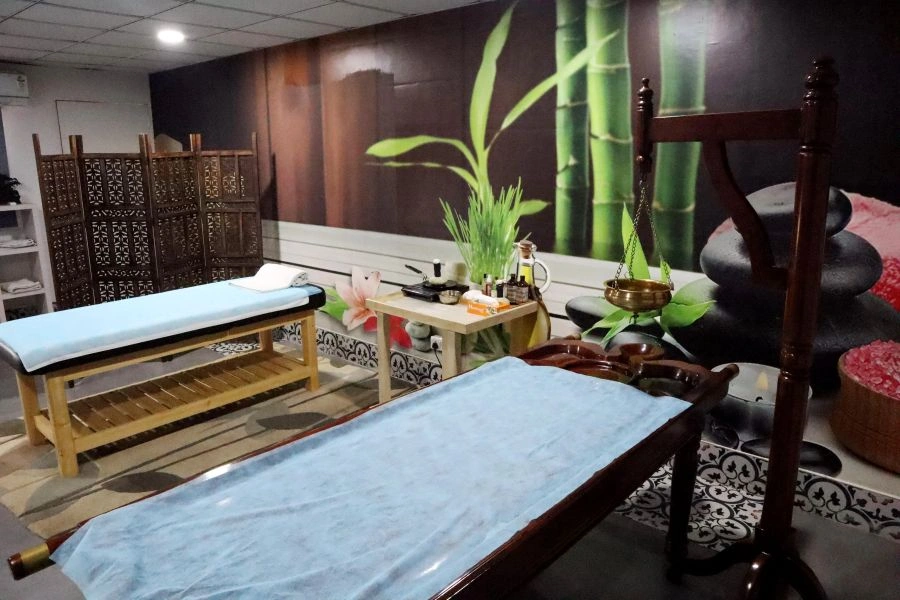
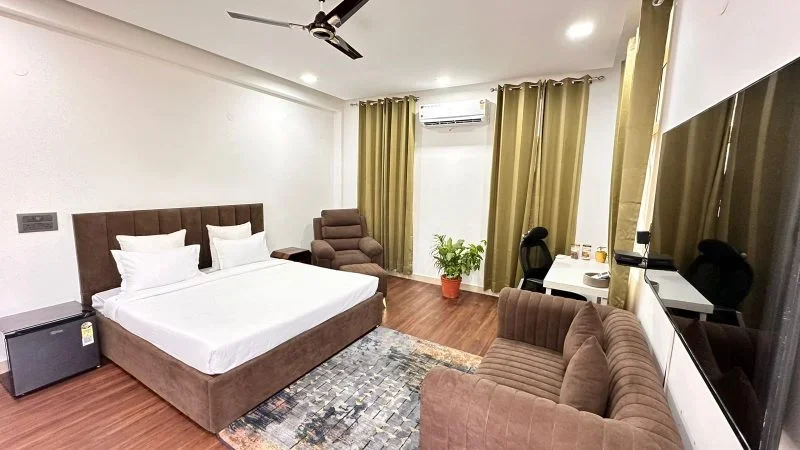
Take a Look Inside Our Delhi Facility






Conditions We Treat















.png)






WHAT OUR PATIENTS SAY
Frequently Asked Questions
Substance use often begins as a way to dull a persistent low mood. It can feel like relief at first, but it tends to deepen depression over time, so each condition ends up reinforcing the other.
This is assessed carefully as part of intake, since certain combinations and interactions need specific attention. Medication choice and monitoring are adjusted based on that history.
When withdrawal management is medically necessary, it happens first, under close supervision, with mood tracked the whole time. Depression treatment then continues alongside ongoing addiction care rather than as a separate, later phase.
No, Many cases are managed through outpatient care or our Day Care Programme. More severe situations, particularly where there's active suicidal risk, may need closer supervision for a period.
Yes, Sustained, integrated care, combining medication, therapy, and family involvement, produces meaningfully better long-term outcomes than treating either condition in isolation.
Neither is treated first. Both need to be addressed at the same time, since leaving either one untreated while focusing on the other consistently leads to relapse in the condition that was left out.
Look at why it's happening. If it's being used specifically to get through low periods rather than for enjoyment, that's a strong indicator the two are connected, and a full assessment can confirm it either way.
More than most expect. Family sessions help loved ones see how depression and substance use have been feeding each other, which changes how they respond and support recovery from that point on.
It depends on severity and history, and ongoing follow-up matters more than any fixed timeline, this isn't a programme with a set end date.
Depressive symptom history, substance use patterns, family background, and specifically how the two have been interacting, mapped out together to shape one treatment plan from day one.
How to reach Athena - Delhi
Athena Luxus, Delhi
Athena Luxus, South Delhi, New Delhi
Landmark: South Delhi
- South Delhi
- Central Delhi
- Gurugram border areas
- Noida border areas
Contact us: +919289086193
Speak to Our Care Team - 24×7 Confidential Support
Confidential help is just a call or chat away. Our team is ready to listen - without judgment, without pressure.
