
Bipolar Disorder and Addiction Treatment in Noida
Athena Behavioral Health provides best bipolar disorder and addiction treatment in Noida for exactly this pattern, where two conditions have become so interlinked that neither can be resolved without addressing the other.
- Combined psychiatric assessment for mood and substance use
- Detox managed by the same treating team
- Mood stabilisation continues throughout
- One clinical team for both diagnoses
- Discreet, judgment-free care
- Aftercare for both relapse and mood recurrence
Book Your Appointment

Bipolar Disorder and Addiction Treatment in Noida: The Two-Way Street
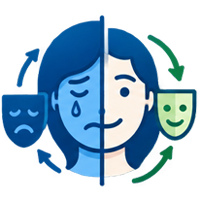
It's rarely a coincidence when bipolar disorder and addiction show up in the same person. Manic phases often bring a false sense of invincibility that makes risky substance use feel harmless in the moment, while depressive phases can turn substances into the only thing that quiets the weight of it. Over time, this creates a loop: mood instability fuels substance use, and substance use in turn destabilises mood further, making the original diagnosis harder to pin down and easier for both patient and doctor to misread.
At Athena Behavioral Health Greater Noida, treatment for bipolar disorder and addiction begins with a single, combined evaluation rather than two separate ones, mapping out mood episode patterns, substance use history, and any immediate withdrawal or safety risk before anything else is decided. Where dependence has set in physically, this assessment also determines what kind of medical supervision detox will require. Families frequently tell us they'd spent years bouncing between an addiction counsellor and a psychiatrist who never once spoke to each other.
"If someone is in the middle of acute withdrawal, showing signs of a manic episode with dangerous or reckless behaviour, or expressing suicidal intent, this needs urgent attention. Contact your local emergency number or the nearest hospital immediately. Nothing takes priority over safety."
Meet Our Psychiatrists for Bipolar Disorder and Addiction Treatment in Noida

Prof. (Dr.) Nimesh G. Desai

Dr. Tanul Jain

Dr. Prachi Jain

Dr. Aamir Ahad Wani
A Closer Look at How Treatment Is Structured Here
One Assessment, Not Two Competing Diagnoses
Mood history, substance use severity, and withdrawal risk are all evaluated in a single process, so the treatment plan addresses the full picture from the outset rather than patching together separate opinions.
Withdrawal Is Managed Before Anything Else Begins
When physical dependence is present, supervised medical detoxification comes first, giving the body a stable baseline before mood-focused treatment starts.
Mood Medication Doesn't Wait Until Sobriety Is "Established"
Mood stabilisers are introduced and adjusted in parallel with addiction treatment from early on, rather than being delayed until substance use is fully resolved.
Therapy Targets the Loop Itself, Not Just Each Half
Individual and group Psychotherapy & Counselling sessions focus specifically on the pattern connecting mood shifts to substance use, so patients learn to recognise the link as it's happening.
A Middle Ground Between Weekly Visits and Full Admission
Our Day Care Programme gives patients who need closer monitoring several structured hours at the centre each day, without requiring residential admission.
Physical Wellbeing Is Treated as Part of Stability
Mindfulness, Yoga & Wellness sessions help regulate the physical symptoms of both mood episodes and cravings, giving patients something they can use between sessions.
Clinical Excellence
Why This Requires More Than Two Specialists Working Separately
Treating bipolar disorder and addiction as a single, connected condition takes a different kind of clinical training than simply having an addiction specialist and a psychiatrist on the same premises. Our team is specifically trained in dual diagnosis care, where mood stabilisation and substance use treatment are planned as one continuous process rather than two parallel tracks that occasionally cross paths. This integrated approach gives patients a far better chance of lasting stability.

Most families who come to us searching for bipolar disorder and addiction treatment in Noida have already been through a rehab programme, a psychiatrist, or both, without either fully holding. Recognizing how closely mood episodes and substance use feed each other is where effective treatment begins, and it is why a single coordinated plan works where separate efforts often fall short.
Every case looks different depending on which condition is driving the other. A patient whose substance use spikes almost exclusively during manic episodes needs a different treatment emphasis than one using substances to blunt the weight of depressive lows. Professionals managing this alongside demanding careers can draw on our Executive & High-Performance Care and Corporate Wellness & EAP programmes, while younger patients are supported through Child & Adolescent Psychiatry.
The same clinical team follows a patient from the first assessment through years of maintenance, so nothing about the case has to be re-explained to someone new partway through. This continuity builds trust, keeps care consistent, and helps patients stay engaged and committed to recovery, especially during the difficult stretches when old patterns try to return.
Modern Lifetime Challenges
What Makes This Combination Easy to Miss in Noida
A culture where a few extra drinks during a "good phase" gets read as celebration rather than a warning sign, where low, withdrawn stretches get explained away as simply needing rest, and where admitting to a substance use pattern still carries more stigma than admitting to a mood disorder, all make this dual diagnosis one of the easiest to overlook for years. It's frequently treated as either a straightforward addiction problem or a standalone mood disorder, with the other half going unaddressed entirely. Over time, the person and the people around them can be left confused by cycles of high energy, sudden crashes, and worsening substance use, without ever seeing that these patterns are connected.
There's a meaningful difference in how this combination plays out compared to either condition on its own. Knowing where that line falls matters because the two situations need very different treatment, and the right diagnosis is what makes effective care possible. An accurate assessment also helps families replace blame and confusion with understanding and practical support.
Addiction without a mood disorder underneath it: Substance use patterns tend to stay fairly consistent and respond predictably to standard addiction treatment on its own. Mood stays within a relatively steady range, and progress in treatment usually holds without needing a separate plan for mood stabilisation.
Addiction layered on bipolar disorder: Substance use rises and falls sharply with mood episodes, which means addiction treatment alone tends to work temporarily, then unravel the next time a manic or depressive phase hits. Over time, sleep, judgment, finances, and relationships suffer, and lasting recovery depends on treating both conditions together rather than one at a time.

What Happens When Only One Condition Is Treated vs When Both Are Treated Together
Many families reach us after already trying rehab, a psychiatrist, or both, separately. This table shows the pattern our team sees most often when only one half of this combination gets addressed, compared to what changes when both are treated as one connected process from the start.
| Addiction Treated Alone | Bipolar Disorder Treated Alone | Both Treated Together, Integrated | |
| What Improves First | Substance use stops during the treatment period | Mood swings become less extreme with stabilising medication | Both begin to settle together, since neither is left to destabilise the other |
| Where It Tends to Break Down | A manic or depressive episode resurfaces and substance use returns as a coping response | Substance use continues in the background, quietly undermining medication effectiveness and sleep | Rarely breaks down from one condition alone, since both are monitored as a connected pattern |
| Typical Timeline to Relapse or Setback | Often within months of a mood episode, sometimes sooner | Gradual, as unmanaged substance use slowly erodes mood stability | Setbacks, when they happen, are usually caught early through combined monitoring |
| What the Patient Usually Says Afterward | "Rehab worked, but nobody connected it back to my mood." | "The medication helped, but I never dealt with the drinking underneath it." | "This is the first time both were actually treated as one thing." |
| Long-Term Outcome | Short-term sobriety that struggles to hold through the next mood episode | Improved mood stability that keeps getting undermined by ongoing substance use | Meaningfully better long-term stability in both mood and sobriety, supported by combined aftercare |
Warning Signs That Get Read as "Just a Phase"
Because both conditions can look like ordinary stress responses on the surface, the signs of this combination often get dismissed far longer than they should.
Substance Use That Rises and Falls With Mood
Noticeably more drinking or drug use during periods of high energy or low mood, rather than a steady, unchanging pattern.
Rehab That Worked, Until It Suddenly Didn't
A history of completing addiction treatment successfully, only to relapse once a mood episode resurfaces months or years later.
Reckless Decisions Made During "Good" Periods
Overspending, substance binges, or high-risk choices made specifically during stretches of unusually high energy or confidence.
Substances as the Only Way Out of a Low
Reaching for alcohol or drugs specifically to escape a heaviness or emptiness that feels otherwise impossible to sit with.
Sleep That Disappears Before the Substance Use Does
A reduced need for sleep during high-energy phases, often followed closely by an uptick in substance use to manage the resulting restlessness.
Suicidal Thoughts Surfacing During Low or Mixed Phases
In more serious cases, this requires immediate clinical attention and a structured safety plan.
Not Sure If This Is You? Talk to a Specialist
Confidential Support, available 24×7
ABOUT THERAPY AT ATHENA
How Treatment Unfolds, Stage by Stage
Stage One, Mapping Both Conditions Together
A single clinical assessment covers mood history, substance use patterns, and any safety or withdrawal concerns, forming one combined treatment plan rather than two separate ones.
Stage Two, Stabilising the Body First
Where physical dependence exists, supervised detoxification manages withdrawal safely before mood-focused work begins in earnest.
Stage Three, Treating the Connection, Not Just the Parts
Mood stabilisation runs alongside structured Psychotherapy & Counselling that specifically addresses how each condition triggers the other, delivered through individual and group sessions.
Stage Four, Learning to Spot Early Warning Signs
As things stabilise, sessions shift toward helping patients recognise the earliest signs of a mood shift or a relapse risk, well before either one escalates. Patients continue with reduced-frequency sessions focused on maintaining both mood stability and sobriety, supported by an aftercare plan built around both.
Why Choose Us
What Sets Integrated Dual Diagnosis Care Apart

Every patient is managed by a psychiatrist and clinical psychologist working from the same case file, not an addiction counsellor handling one half of the picture while mood symptoms get referred elsewhere. This matters because treating either condition alone tends to produce short bursts of progress that don't hold, while genuinely integrated care builds something that lasts. Working from one shared picture also means the patient never receives conflicting advice about what to focus on first.
This isn't a programme built around managing whichever crisis is loudest that week. It's a structured process that moves from safety and detox, through combined treatment of both conditions, and into long-term maintenance of each. Families are brought in early, since knowing the difference between a mood warning sign and a relapse warning sign matters just as much at home as it does in session. Progress is reviewed regularly so the plan keeps pace with how the patient is actually responding.
For those who need more structure than occasional therapy visits but don't require full residential care, our Day Care Programme offers a practical middle ground, several supervised hours each day while the person continues living at home. It provides steady support and accountability during the most vulnerable early weeks, without pulling the person away from family routines or work.
How We Help
From First Contact to Long-Term Stability
Asking for help when two conditions are wrapped around each other can feel more daunting than asking for help with either one alone. Here's what the process looks like once you reach out.
Call our helpline or reach out over WhatsApp, and your first appointment will be confirmed the same day.
A psychiatrist conducts a single assessment covering mood history, substance use, and safety or withdrawal risk, available in person or via a private video consultation.
Detoxification where needed, ongoing mood stabilisation, integrated Psychotherapy & Counselling, and the Day Care Programme where appropriate, are brought together based on what the specific case requires.
Our Relapse Prevention & Aftercare programme carries on with reduced frequency well past initial stabilisation, because managing this combination well is an ongoing process, not something a single course of treatment resolves.
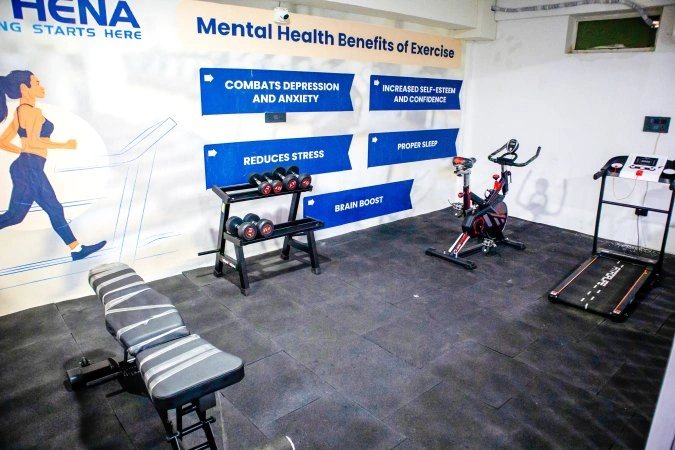
Take a Look Inside Our Noida Facility







Conditions We Treat






.png)






WHAT OUR PATIENTS SAY
Frequently Asked Questions
Neither, exactly. Bipolar disorder is a biological mood condition, and substance use often develops as a response to it, whether that's chasing the high of a manic phase or numbing a depressive one. Over time the two feed each other, regardless of which appeared first.
Only if physical dependence is present. In that case, medically supervised detox comes first to stabilise the body safely before mood-focused therapy and psychotherapy begin.
If the mood disorder underneath the addiction isn't identified and treated, substance use tends to return once another manic or depressive episode hits. Treating both together significantly lowers this risk.
Yes. With sustained, integrated treatment, many people achieve stable, well-managed mood along with lasting sobriety. It requires ongoing attention, similar to any chronic condition, but a stable, functional life is a realistic outcome.
It depends on how severe each condition is individually, but many patients see real stabilisation within the first few months, with longer-term maintenance continuing well beyond that point.
It takes care, since substances can mimic or mask genuine mood symptoms. Our team often reassesses mood patterns once withdrawal has settled, to make sure the diagnosis reflects the person's actual baseline rather than a substance-influenced state.
Frequently, yes. Mood stabilisers manage the bipolar symptoms, and additional support may be needed during withdrawal or for co-occurring symptoms, all managed by one coordinated team rather than separate prescribers.
No. Bipolar disorder has a biological basis, and substance use often develops as an attempt to cope with it. It isn't the result of upbringing, and blaming yourself doesn't help the person move forward.
No, only when withdrawal, a severe mood episode, or a safety risk makes it necessary. Most dual diagnosis treatment happens through outpatient care or our Day Care Programme.
The clinical team walks through mood episode history, substance use patterns, any withdrawal risk, and safety concerns, using all of it to build a single treatment plan that treats both conditions as connected from day one.
How to reach Athena - Noida
Athena Behavioral Health, Noida
opposite Vaibhav Heritage, near Ek murti chowk, Sector 16B, Roza Yakubpur, Greater Noida, Uttar Pradesh 201318
Landmark: Near Ek murti chowk, Sector 16 B,
- Sector 18, 62, 63, 71
- Greater Noida
- Noida Extension
- Ghaziabad border areas
Contact us: +919289086193
Speak to Our Care Team - 24×7 Confidential Support
Confidential help is just a call or chat away. Our team is ready to listen - without judgment, without pressure.