Bipolar Disorder and Addiction Treatment in Gurgaon
Athena Behavioral Health provides bipolar disorder and addiction treatment in Gurgaon for exactly this, when a mood condition and a substance problem have grown so tangled together that treating one without the other keeps failing.
- Combined Psychiatric Assessment & Diagnosis
- Supervised detox where needed
- Mood stabilisation alongside addiction care
- Simultaneous treatment, never sequential
- Family-focused relapse warning signs
- Long-term Relapse Prevention & Aftercare
Book Your Appointment
Accredited, Licensed & Trusted Care
Every aspect of our care is backed by proper accreditation and licensing. From patient safety to treatment protocols, we meet the standards that matter most to your family's trust and wellbeing.
NABH Accredited
Our facility follows nationally recognized healthcare standards and strict safety protocols, ensuring every treatment step meets certified clinical benchmarks for quality care.
Licensed by State Mental Healthcare Act, Haryana
We operate under full authorization from the Haryana State Mental Healthcare Act, meeting all regulatory and legal requirements for safe, ethical treatment.
Govt. Licensed De-Addiction Center
As a government licensed centre, we provide structured, medically supervised de-addiction and rehabilitation programs built for lasting recovery and wellbeing.

Bipolar Disorder and Addiction Treatment in Gurgaon: Two Conditions That Feed Each Other, Not Coincidence
Substance use and bipolar disorder occurring together isn't bad luck, it's a well-documented pattern. Mania often brings impulsivity that makes substance use feel harmless in the moment, and depression brings a heaviness that substances falsely promise to lift. Over time, each condition makes the other harder to manage, medication compliance slips, mood episodes get more erratic, and the substance use becomes harder to separate from the illness driving it.
At Athena Behavioral Health, for bipolar disorder and addiction treatment in Gurgaon begins with one integrated Psychiatric Assessment & Diagnosis, not two disconnected evaluations from specialists who never speak to each other. We trace the actual timeline of both conditions, how they've influenced each other, and what pattern the substance use follows relative to mood states, before building a single treatment plan. Many patients tell us this is the first time anyone actually connected the two instead of treating them as unrelated problems.
"If someone is expressing suicidal thoughts, especially during a depressive episode, or is in a state of acute mania with impaired judgment, this requires immediate attention. Contact your local emergency number or the nearest hospital right away. Safety always comes first, before anything else."
Meet Our Psychiatrists for Bipolar Disorder and Addiction Treatment in Gurgaon

Prof. (Dr.) Nimesh G. Desai

Dr. Ashish Mittal

Dr. Rahul Rai

Dr. Supriya Mathur

Dr. Adwitiya Ray

Dr. Mrigakshi Parasor

Dr. Anindo Mitra
Inside Our Gurgaon Centre: How Integrated Treatment Actually Works
One Assessment Covers Both Conditions Together
The evaluation maps mood episode history and substance use patterns side by side, looking specifically at how each has been triggering the other, forming the basis of a single treatment plan.
Detox Is Never Handled in Isolation
Where withdrawal management is needed, mood is monitored closely throughout, since withdrawal symptoms can genuinely resemble or trigger a mood episode.
Mood Stabilisation and Addiction Care Happen at the Same Time
We don't wait for one condition to settle before addressing the other. Simultaneous treatment consistently produces better outcomes than treating either one first.
Support Is Scaled to the Complexity of the Case
For patients needing more structure than weekly outpatient sessions but not full residential care, our Day Care Programme offers several supervised hours at the centre each day.
Medication Is Chosen With Both Conditions in Mind
Mood stabilisers and other psychiatric medications are selected and monitored with full awareness of substance use history, since some carry real risk in that context.
Recovery Includes the Body, Not Just the Mind
Mindfulness, Yoga & Wellness sessions help manage the restlessness of mania and the heaviness of depression, both common relapse triggers.
Clinical Excellence
Clinicians Trained in Dual Diagnosis, Not Split Between Two Specialists
Our psychiatrists and clinical psychologists treat bipolar disorder and addiction as a genuine dual diagnosis requiring integrated care, not two separate treatment tracks handled by different teams. When mood and substance use are treated apart, each one tends to undermine progress on the other, which is why a single, coordinated plan gives patients a far better chance of lasting stability.

Best bipolar disorder and addiction treatment in Gurgaon searches often come from people who've already tried exactly that split approach, completing rehab only to relapse the moment an unmanaged mood episode hit, or stabilizing on medication only to have substance use quietly unravel it. Recognizing how closely the two conditions feed each other is where effective treatment begins.
No two cases look the same. Someone whose drinking spikes specifically during manic phases needs a different approach than someone using substances mainly to survive depressive lows. Understanding what is truly driving the substance use in each person is what allows the plan to address the real cause, and it shapes every decision that follows, from medication choices to the type of therapy offered. A detailed assessment at a trusted psychiatric hospital in Gurgaon maps out mood patterns, substance use history, and triggers together, so that one coordinated plan can treat both conditions at the same time rather than leaving either one unaddressed.
For professionals managing this dual diagnosis alongside demanding careers, our team can draw on Executive & High-Performance Care and Corporate Wellness & EAP, and younger patients are supported through our Child & Adolescent Psychiatry programme. One clinical team follows a patient's case from the first assessment through long-term maintenance, so nothing has to be re-explained to someone new along the way, and care builds consistently from one stage to the next.
Modern Lifetime Challenges
Why This Combination Slips Past Recognition in Gurgaon
A workplace culture where manic energy can pass for ambition rather than a warning sign, a social scene where drinking after long work hours is treated as the unquestioned default, and a general tendency to treat mood swings and heavier substance use as two completely unrelated observations all contribute to this dual diagnosis staying hidden for years. Over time, the person and the people around them can be left confused by cycles of high energy, sudden crashes, and worsening substance use, without ever seeing that these patterns are connected.
There's a real difference between substance use tied to ordinary stress and substance use actually driven by bipolar disorder. Knowing where that line falls matters because the two need very different treatment, and the right diagnosis is what makes effective care possible. An accurate assessment also helps families replace blame and confusion with understanding and practical support.
Situational substance use: Doesn't follow a predictable pattern tied to mood states, and tends to ease once the specific stressor is addressed directly. The person can usually cut back when circumstances improve, and their mood stays within a fairly steady range between stressful periods.
Bipolar-linked substance use: Escalates during manic phases, gets used to numb depressive phases, and keeps both conditions locked in a worsening cycle. Over time, sleep, judgment, finances, and relationships suffer, and attempts to stop on one's own often fail because the underlying mood pattern remains untreated.

How Mood Phase Drives Substance Use, and What Treatment Targets at Each Stage
Families often notice the drinking or drug use and the mood swings as two separate problems, without realising how closely one is driving the other. This table shows how our team maps substance use against mood phase during the integrated assessment, since treatment is built around this connection, not around either condition alone.
| Mood Phase | How Substance Use Typically Shows Up | Underlying Reason | What Treatment Targets Here |
| Manic or Hypomanic Phase | Increased drinking, drug use or risk-taking alongside unusual confidence, reduced need for sleep and impulsivity | Substance use feels consequence-free in the moment; judgment and risk perception are already impaired by the mood state itself | Mood stabilisation as the priority, alongside close monitoring, since insight into the risk is limited during this phase |
| Depressive Phase | Substance use as a way to numb persistent low mood, hopelessness or fatigue | Substances falsely promise relief from a heaviness that won't otherwise lift | Combined medication and Psychotherapy & Counselling, with safety planning if suicidal thoughts are present |
| Mixed or Unstable Phase | Erratic, unpredictable use that doesn't follow a single clear pattern | Rapid mood shifts make both the mood symptoms and the substance use harder to track and anticipate | Closer supervision, often through our Day Care Programme, until a clearer pattern stabilises |
| Between Episodes (Euthymic Phase) | Reduced but not always absent use; risk of relapse remains if medication is stopped | A false sense that neither condition needs ongoing attention once things feel stable | Relapse Prevention & Aftercare, family-focused monitoring for early warning signs, and continued medication compliance |
Patterns Families Notice but Rarely Connect
Most families spot pieces of this pattern without realizing the two conditions are linked.
Substance Use That Spikes During High-Energy Periods
Increased drinking or drug use during phases of unusual confidence, impulsivity, or barely needing sleep.
Using Substances Just to Get Through a Low
Relying on alcohol or drugs specifically because a depressive episode feels otherwise unmanageable.
Mood Episodes That Track Closely With Substance Use
Mania becoming more erratic or depression sinking deeper in ways that line up with substance use patterns.
Rehab That Doesn't Hold
Completing addiction treatment successfully, only to relapse shortly after an untreated mood episode begins.
Medication Non-Compliance
Skipping prescribed mood stabilisers, sometimes due to interactions with substance use, sometimes out of denial that both conditions are real.
Family Confusion About What's Actually Happening
Loved ones unable to tell whether erratic behavior is the illness, the substance, or both feeding off each other.
Not Sure If This Is You? Talk to a Specialist
Confidential Support, available 24×7
ABOUT THERAPY AT ATHENA
Phase by Phase: How Bipolar Disorder and Addiction Treatment Unfolds in Gurgaon
Phase One, Integrated Assessment
A psychiatrist conducts one comprehensive Psychiatric Assessment & Diagnosis covering mood episode history, substance use patterns, and the interaction between the two.
Phase Two, Detox With Mood Monitoring
Where withdrawal is needed, it happens under close medical supervision with mood tracked throughout, since the two can easily be mistaken for each other.
Phase Three, Simultaneous Treatment
Mood stabilisation through medication and structured Psychotherapy & Counselling runs alongside addiction-focused CBT and family-focused therapy, at the same time, not sequentially.
Phase Four, Long-Term Stability
As both conditions stabilise, treatment shifts toward Mindfulness, Yoga & Wellness practices, structured routine, and a Relapse Prevention & Aftercare plan addressing triggers for both conditions together.
Why Choose Us
What Sets Our Approach to This Dual Diagnosis Apart

Every case is managed jointly by a psychiatrist and a clinical psychologist working from the same understanding of both conditions, not two specialists operating from separate charts. This matters significantly, because the current standard of care for co-occurring bipolar disorder and addiction is genuinely integrated treatment, and treating either condition in isolation reliably leads to relapse in whichever one was left unaddressed. Working from one shared picture also means the patient never receives conflicting advice, and the plan is reviewed regularly so it keeps pace with how they are actually responding.
Recovery doesn't stop once initial stability is reached. Bipolar disorder is a chronic, cyclical condition, and certain stressors or life transitions can bring both mood symptoms and substance cravings back to the surface even after real progress. That is why patients leave with a clear, written plan for recognizing early warning signs, managing triggers, and returning for support before a difficult period turns into a full setback.
For patients who need more consistent structure than weekly therapy but not full residential admission, our Day Care Programme bridges that gap with several supervised hours each day while the person continues living at home. It offers steady support and accountability during the most vulnerable early weeks, without pulling the person away from family routines or work.
How We Help
From Reaching Out to Ongoing Recovery
Reaching out is often harder when two things feel broken at once and it's unclear which to mention first. Here's what follows once you do.
Call our helpline or message us on WhatsApp, and get confirmation of your first appointment the same day.
A psychiatrist carries out a full Psychiatric Assessment & Diagnosis covering both conditions together, either in person or through a private video consultation.
Medical detox where needed, mood stabilisation, Psychotherapy & Counselling, family-focused therapy, and where appropriate, our Day Care Programme, are combined based on the specifics of the case.
Our Relapse Prevention & Aftercare programme tracks triggers for both the mood disorder and the substance use together, since they rarely resurface separately.
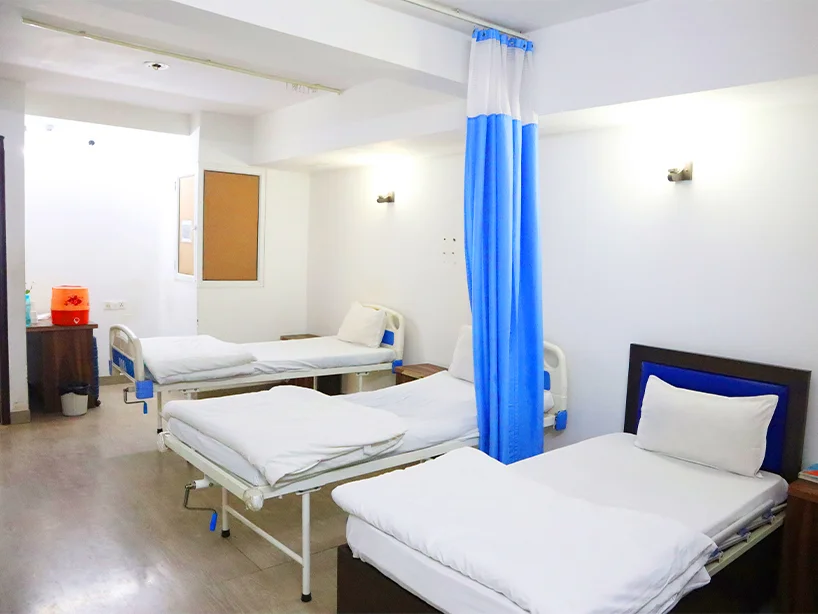
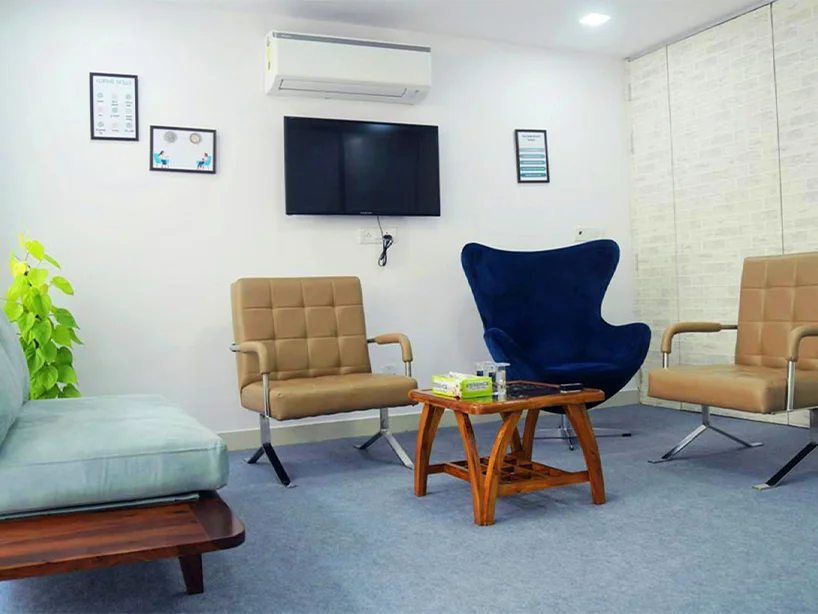
Take a Look Inside Our Gurgaon Facility






Conditions We Treat











.png)






WHAT OUR PATIENTS SAY
Frequently Asked Questions
Mania often brings impulsivity that makes substance use feel consequence-free in the moment, while depression brings a heaviness that substances falsely promise to relieve. Over time these reinforce each other, which is why treating them together works better than treating either alone.
This gets carefully evaluated during assessment, since certain mood stabilisers carry added risk alongside substance use. Medication choices and monitoring are adjusted with that full history in mind.
Where withdrawal is medically necessary, it happens first under close supervision with mood tracked throughout. Bipolar treatment then continues right alongside ongoing addiction care rather than waiting for a separate phase.
No, Many cases are managed through outpatient care or our Day Care Programme. More acute situations, particularly active mania or a safety concern, may need closer supervision for a period.
Yes, Sustained integrated care, medication management, therapy, and family involvement together produces meaningfully better long-term outcomes than treating each condition on its own.
Neither goes first. Integrated, simultaneous treatment of both is the current standard of care, since addressing one while ignoring the other consistently causes relapse in whichever condition was left untreated.
Look at the pattern. If substance use rises specifically during high-energy or low-mood periods rather than following general life stress, that's a strong sign the two are linked, and a proper assessment can confirm it.
A significant one. Family-focused therapy helps loved ones recognize the earliest signs of a mood episode, which typically overlaps with the exact period when relapse risk for substance use rises sharply.
This depends heavily on severity and history, but ongoing management is standard given bipolar disorder's cyclical nature, this isn't a fixed-length programme with a hard end date.
Mood episode history, substance use patterns, family history, and specifically how the two have been interacting, all mapped out together to build one treatment plan from the very start.
How to reach Athena - Gurgaon
Athena Behavioral Health, Gurgaon
202, Near DPS Public School, Sector 47, Gurugram, Haryana 122018
Landmark: Near DPS Public School, Sector 47
- DLF Phase 1, 2, 3, 4, and 5
- Cyber City and Udyog Vihar
- Sohna Road and Golf Course Road
- MG Road and IFFCO Chowk areas
- Sector 14, 22, 23, 29, 31, 45, 57, and 67
- Manesar and Dharuhera (industrial corridor)
Contact us: +919289086193
Speak to Our Care Team - 24×7 Confidential Support
Confidential help is just a call or chat away. Our team is ready to listen - without judgment, without pressure.