
Best Bipolar Disorder and Addiction Treatment in Delhi
Athena Behavioral Health provides bipolar disorder and addiction treatment in Delhi for exactly this, when two conditions have quietly become dependent on each other and neither one improves when treated alone.
- Unified assessment for both conditions
- Detox with continuous mood monitoring
- Simultaneous mood and addiction therapy
- Family sessions for early warning signs
- Ongoing relapse prevention for both
- Individualized medication management
Book Your Appointment

Bipolar Disorder and Addiction Treatment in Delhi: When One Condition Quietly Sustains the Other
The overlap between bipolar disorder and substance use isn't accidental. A manic phase can make risky, impulsive substance use feel exciting rather than dangerous. A depressive phase can make substances feel like the only functional option left. Left unaddressed, this creates a cycle where mood instability drives substance use, and substance use in turn makes mood episodes harder to predict, medicate, and manage.
At Athena Behavioral Health, treatment for bipolar disorder and addiction in Delhi starts with a single integrated Psychiatric Assessment & Diagnosis rather than separate consultations that never talk to each other. We look at the actual sequence of events, which condition emerged first, how they've reinforced each other over time, and where the substance use fits relative to mood states, before deciding on any course of treatment. Many patients tell us this is the first time a clinician actually connected these dots instead of handing them two prescriptions for two unrelated problems.
"If someone is expressing suicidal thoughts, especially during a depressive episode, or is in a state of acute mania with impaired judgment, this requires immediate attention. Contact your local emergency number or the nearest hospital right away. Safety always comes first, before anything else."
Meet Our Psychiatrists for Bipolar Disorder and Addiction Treatment in Delhi

Prof. (Dr.) Nimesh G. Desai

Dr. Ashish Mittal

Dr. Rahul Rai
Inside Our Delhi Centre: How Combined Treatment Actually Works
One Evaluation for Both Conditions
The assessment maps mood history and substance use together, identifying exactly how they've been triggering one another, rather than treating them as unrelated intake questions.
Detox Includes Continuous Mood Tracking
Where medical detox is required, mood is monitored throughout the process, since withdrawal can closely mimic or provoke a mood episode.
Both Conditions Are Treated in Parallel
Mood stabilisation and addiction-focused care run side by side from day one, rather than waiting for one to settle before starting the other.
Support Matches How Complex the Case Is
For patients needing more structure than weekly outpatient visits but not full residential care, our Day Care Programme offers several supervised hours at the centre daily.
Medication Choices Reflect Both Diagnoses
Mood stabilisers and other psychiatric medications are selected with substance use history fully factored in, since certain combinations carry real risk.
The Nervous System Gets Attention Too
Mindfulness, Yoga & Wellness sessions help manage the physical restlessness of mania and the heaviness of depression, both frequent relapse triggers.
Clinical Excellence
A Team Built for Dual Diagnosis, Not Two Separate Referrals
Our psychiatric hospital in Delhi and clinical psychologists approach bipolar disorder and addiction as a single dual diagnosis requiring coordinated care, rather than routing patients between a psychiatrist for one issue and an addiction counsellor for the other. When mood and substance use are treated apart, each one tends to undermine progress on the other, which is why one coordinated plan gives patients a far better chance of lasting stability.

Best bipolar disorder and addiction treatment in Delhi searches often come from people who've already tried that fragmented approach, completing a detox programme only to relapse once an unmanaged mood episode hit, or stabilizing on medication only to have substance use undo that progress. Recognizing how closely the two conditions feed each other is where effective treatment begins.
Every case presents differently. Someone whose drinking climbs specifically during manic episodes needs a different focus than someone using substances mainly to survive depressive lows. Understanding what is truly driving the substance use in each person is what allows the plan to address the real cause, and it shapes every decision that follows, from medication choices to the type of therapy offered.
Professionals managing this dual diagnosis alongside demanding careers can access our Executive & High-Performance Care and Corporate Wellness & EAP support, while younger patients are handled through our Child & Adolescent Psychiatry programme. One clinical team stays with a patient's case from the first assessment through long-term maintenance, so the full history never has to be repeated to someone new, and care builds consistently from one stage to the next.
Modern Lifetime Challenges
Why This Combination Goes Unrecognized in Delhi
A high-pressure professional culture where a manic burst of productivity can be mistaken for drive rather than a warning sign, easy social access to alcohol as the default way to unwind after long days, and a habit of treating "his moods have been unpredictable" and "he's drinking more than usual" as two separate, unrelated concerns all keep this dual diagnosis hidden for years at a time. Over time, the person and the people around them can be left confused by cycles of high energy, sudden crashes, and worsening substance use, without ever seeing that these patterns are connected.
There's a meaningful difference between substance use tied to general stress and substance use actually driven by bipolar disorder. Knowing where that line falls matters because the two need very different treatment, and the right diagnosis is what makes effective care possible. An accurate assessment also helps families replace blame and confusion with understanding and practical support.
Situational substance use: Doesn't follow a predictable link to mood states, and typically eases once the underlying stressor is directly addressed. The person can usually cut back when circumstances improve, and their mood stays within a fairly steady range between stressful periods.
Bipolar-linked substance use: Rises sharply during manic phases, gets used to numb depressive phases, and keeps both conditions locked in a mutually worsening cycle. Over time, sleep, judgment, finances, and relationships suffer, and attempts to stop on one's own often fail because the underlying mood pattern remains untreated.

Tracing the Sequence: Which Condition Came First, and Why It Matters
One of the first things our psychiatrists map out during the initial assessment is the actual order in which these two conditions appeared, since bipolar disorder and addiction don't always develop the same way in every patient. Knowing the sequence changes what the treatment plan needs to prioritise.
| Sequence Pattern | What It Usually Looks Like | What Tends to Drive It | What Treatment Prioritises |
| Bipolar Disorder Emerged First | Mood episodes were present for months or years before substance use became regular or heavy | Substances were initially used to manage the intensity of mania or the weight of depression | Mood stabilisation as the anchor, with addiction care built around it from the same starting point |
| Substance Use Emerged First | Heavier drinking or drug use came first, with mood instability becoming noticeable only later | Prolonged or heavy substance use can itself trigger or unmask an underlying mood disorder | Supervised detox with mood monitored closely throughout, since withdrawal and early mood symptoms can look identical |
| Both Developed Around the Same Time | Mood swings and substance use appeared together, often during a specific stressful period or life transition | A shared trigger, such as a major loss, job change or relationship breakdown, affected both at once | Parallel treatment from day one, addressing the shared trigger alongside both conditions directly |
| Unclear or Long-Standing Overlap | Both conditions have been present for so long that the original sequence is difficult for the patient or family to recall | Years of the two conditions reinforcing each other have blurred where one ends and the other begins | A full diagnostic timeline built through structured history-taking, rather than assuming either condition is secondary |
Signs That Get Noticed Separately, Rarely Together
Most families spot pieces of this pattern without realizing the two conditions are linked.
Substance Use That Spikes During High-Energy Periods
Increased drinking or drug use during phases of unusual confidence, impulsivity, or barely needing sleep. This often overlaps with manic or hypomanic phases.
Using Substances Just to Get Through a Low
Relying on alcohol or drugs specifically because a depressive episode feels otherwise unmanageable. This turns into a coping mechanism that deepens dependency over time.
Mood Episodes That Track Closely With Substance Use
Mania becoming more erratic or depression sinking deeper in ways that line up with substance use patterns. The two conditions end up feeding off and intensifying each other.
Rehab That Doesn't Hold
Completing addiction treatment successfully, only to relapse shortly after an untreated mood episode begins. An unaddressed mood disorder significantly raises the risk of relapse.
Medication Non-Compliance
Skipping prescribed mood stabilisers, sometimes due to interactions with substance use, sometimes out of denial that both conditions are real. This can destabilise both conditions further.
Family Confusion About What's Actually Happening
Loved ones unable to tell whether erratic behavior is the illness, the substance, or both feeding off each other. This uncertainty often delays getting the right professional help at the right time.
Not Sure If This Is You? Talk to a Specialist
Confidential Support, available 24×7
ABOUT THERAPY AT ATHENA
Phase by Phase: How Treatment Unfolds in Delhi
Phase One, Combined Assessment
A psychiatrist conducts one thorough Psychiatric Assessment & Diagnosis covering mood history, substance use patterns, and how the two conditions have interacted over time.
Phase Two, Supervised Detox With Mood in View
Where detox is medically necessary, it happens under close supervision with mood monitored the entire time, since the two can be difficult to tell apart in the moment.
Phase Three, Parallel Treatment
From the Start Mood stabilisation medication and structured Psychotherapy & Counselling run alongside addiction-focused CBT and family-focused therapy simultaneously, not one after the other.
Phase Four, Sustaining Stability Over Time
Mindfulness, Yoga & Wellness practices, a structured daily routine, and a Relapse Prevention & Aftercare plan address triggers connected to both conditions as a single, ongoing focus.
Why Choose Us
Why Integrated Treatment Works Where Fragmented Care Fails

A psychiatrist and a clinical psychologist here work from one shared understanding of a patient's case, not two separate files maintained by unrelated specialists. This distinction matters because integrated treatment is now the recognized standard of care for co-occurring bipolar disorder and addiction, largely because treating one condition while leaving the other unaddressed reliably results in relapse. Working from one shared picture also means the patient never receives conflicting advice, and the plan is reviewed regularly so it keeps pace with how they are actually responding.
Recovery isn't treated as a finish line. Bipolar disorder is a chronic, cyclical condition, which means certain stressors or major life changes can bring both mood symptoms and substance cravings back, even well after real progress has been made. That is why patients leave with a clear, written plan for recognizing early warning signs, managing triggers, and returning for support before a difficult period turns into a full setback.
For patients needing more consistent structure than weekly sessions but not full residential admission, our Day Care Programme offers several supervised hours each day while the person continues living at home. It provides steady support and accountability during the most vulnerable early weeks, without pulling the person away from family routines or work.
How We Help
From Reaching Out to Ongoing Recovery
Reaching out is often harder when two separate things feel wrong and it's unclear which one to mention first. Here's what follows once you do.
Call our helpline or message us on WhatsApp, and get confirmation of your first appointment the same day.
A psychiatrist conducts a full Psychiatric Assessment & Diagnosis covering both conditions together, either in person or through a private video consultation.
Medical detox where required, mood stabilisation, Psychotherapy & Counselling, family-focused therapy, and where appropriate, our Day Care Programme, are combined around the specifics of the case.
Our Relapse Prevention & Aftercare programme tracks triggers connected to both the mood disorder and the substance use together, since they tend to resurface as a pair.
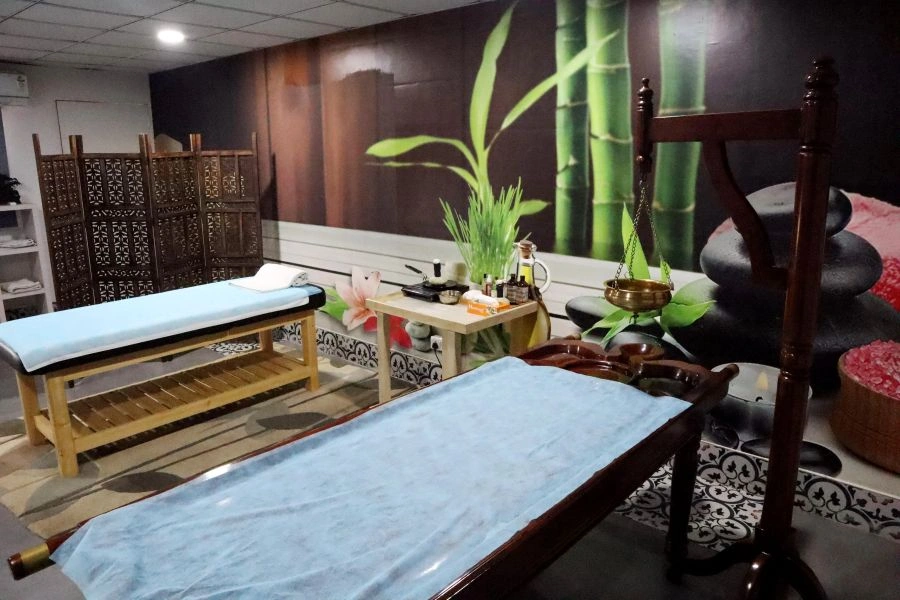
Take a Look Inside Our Delhi Facility







Conditions We Treat















.png)






WHAT OUR PATIENTS SAY
Frequently Asked Questions
Mania frequently brings impulsivity that makes substance use feel exciting rather than risky, while depression brings a heaviness substances falsely promise to relieve. This reinforcing cycle is exactly why treating both together tends to succeed where treating either alone often doesn't.
This is carefully assessed clinically, since certain mood stabilisers and psychiatric medications carry added risk when substance use is present. Medication decisions and monitoring account for this from the outset.
Where medically necessary, detox happens first under close supervision with mood tracked throughout. Bipolar treatment then continues immediately alongside ongoing addiction care rather than waiting.
No, Most cases are managed through outpatient therapy or our Day Care Programme. More acute presentations, particularly active mania or a safety concern, may need closer supervision temporarily.
Yes, With sustained integrated care combining medication, therapy, and family involvement, patients consistently achieve better long-term outcomes than with treatment addressing each condition separately.
Neither should go first. Simultaneous, integrated treatment of both conditions is the current standard of care, since treating one while ignoring the other consistently leads to relapse in whichever was left unaddressed.
Watch the pattern. If substance use rises specifically during high-energy or low-mood periods rather than general life stress, that points strongly to a connection, which a proper assessment can confirm.
Quite a lot. Family-focused therapy teaches loved ones to spot the earliest signs of a mood shift, which usually coincides with the exact window when substance use relapse risk rises sharply.
This varies significantly based on severity and history, but ongoing management is the norm given bipolar disorder's cyclical nature, this isn't treatment with a fixed end date.
The psychiatrist covers mood episode history, substance use patterns, family history, and specifically how the two conditions have influenced each other, building one treatment plan around all of it together.
How to reach Athena - Delhi
Athena Luxus, Delhi
Athena Luxus, South Delhi, New Delhi
Landmark: South Delhi
- South Delhi
- Central Delhi
- Gurugram border areas
- Noida border areas
Contact us: +919289086193
Speak to Our Care Team - 24×7 Confidential Support
Confidential help is just a call or chat away. Our team is ready to listen - without judgment, without pressure.
